
Guide Your Eyes to Read Faster
Use visual tracking to improve speed and focus

Meta-guiding is one of the oldest and most intuitive speed reading techniques, dating back to the early days of speed reading instruction in the 1950s. The concept is simple: use a visual pointer (your finger, a pen, or a cursor) to guide your eyes along the text. Despite its simplicity, meta-guiding is remarkably effective—studies show it can increase reading speed by 25-50% almost immediately, making it the perfect entry point for anyone beginning their speed reading journey.
The science behind meta-guiding relates to how human vision and attention work together. Your eyes are naturally attracted to movement—an evolutionary adaptation that helped our ancestors spot predators and prey. When you move a pointer across text, your eyes are drawn to follow it, creating a smooth, consistent reading pace that you might struggle to maintain through willpower alone. This external pacing mechanism is why meta-guiding works even for people who have tried and failed with other speed reading techniques. You're not fighting your natural tendencies; you're leveraging them.
Beyond pacing, meta-guiding addresses one of the biggest hidden time-wasters in reading: regression. Regression is the unconscious habit of moving your eyes backward to re-read words or phrases you've already passed. Research by eye-tracking pioneer Keith Rayner found that typical readers regress on 10-15% of all eye movements—essentially reading every page 1.1-1.15 times (Rayner, 1998). Over a 300-page book, that's 30-45 extra pages worth of reading time. Meta-guiding dramatically reduces regression because your eyes are following a forward-moving guide; going backward would mean losing sight of the pointer. This single benefit can save hours of reading time per month.
While LumaRead's RSVP technology eliminates the need for meta-guiding in digital reading (since words appear at a fixed position and there's no opportunity for regression), learning meta-guiding remains valuable for two reasons. First, it improves your traditional reading skills for physical books, documents, and screens without RSVP. Second, the mental discipline of following a guide—maintaining focus, resisting the urge to look back, trusting forward progress—transfers to RSVP reading. Many LumaRead users report that practicing meta-guiding with physical books accelerates their adaptation to RSVP.
The beauty of meta-guiding is its immediate accessibility. Unlike techniques that require weeks of practice (like reducing subvocalization) or significant mental effort (like chunking), meta-guiding works the first time you try it. Pick up a book, put your finger under the first line, and start moving. You'll likely notice an immediate speed improvement. With a week or two of conscious practice, meta-guiding becomes automatic—your finger will naturally guide your reading without conscious thought, freeing your mental resources for comprehension.
How Meta-Guiding Technique Works
Benefits
- ✓Increase reading speed by 25-50% almost immediately—this is one of the fastest-acting speed reading techniques
- ✓Reduce regression (re-reading) by 80% or more, eliminating a major hidden time-waster
- ✓Improve focus and concentration by giving your visual system a clear target to track
- ✓Create consistent reading rhythm that prevents the speed variations that hurt comprehension
- ✓Works with any reading material—books, documents, screens, articles—without special equipment
- ✓Complements LumaRead's RSVP training by building the mental discipline of forward-focused reading
- ✓Easy to learn—works on your first attempt and improves with minimal practice
- ✓Physical movement increases engagement, making reading feel more active and less fatiguing
Step-by-Step Guide
Select Your Guiding Tool
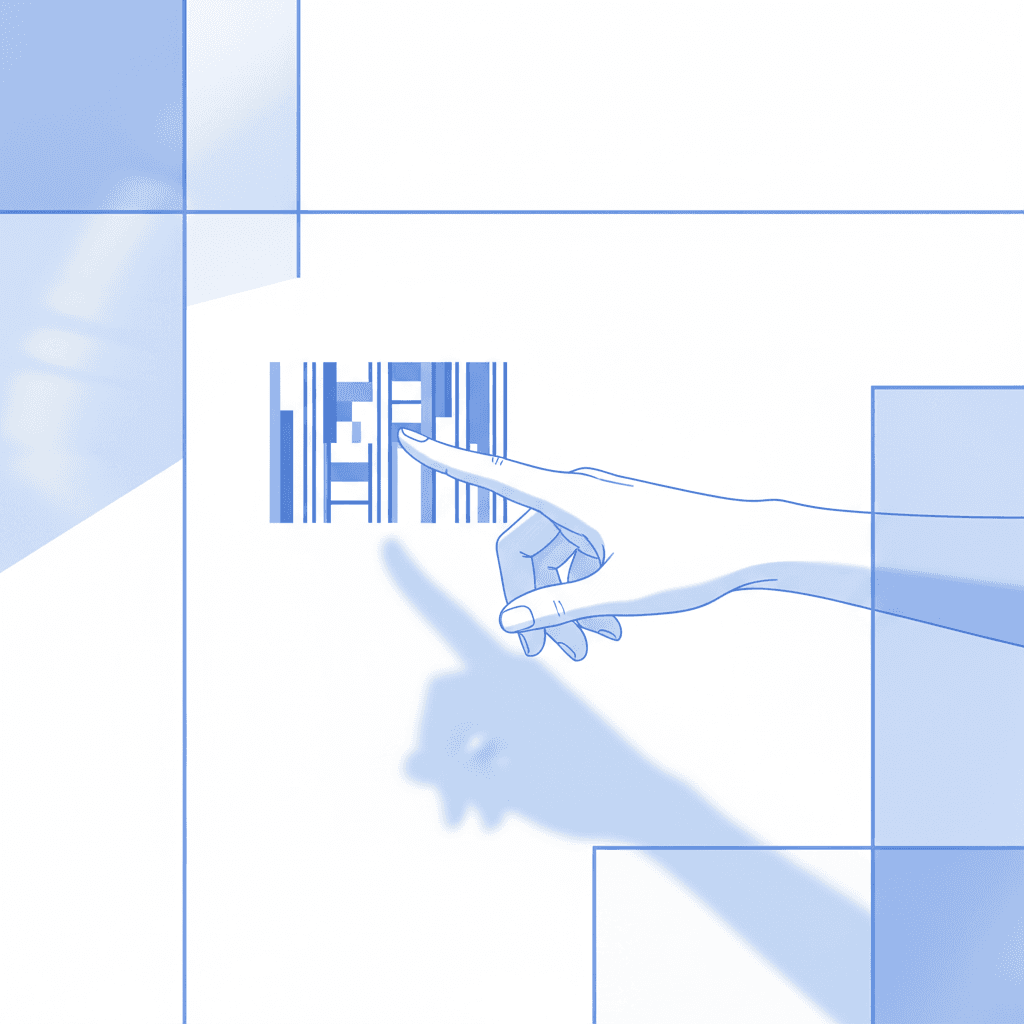
Choose what you'll use as a guide: your index finger is traditional and always available; a pen or chopstick provides more precision and keeps your hand further from the page (reducing shadow); for screen reading, use your cursor or a dedicated pointer tool. Some readers prefer a card held just below the current line. Experiment with different tools to find what feels most natural for you—there's no single 'correct' choice.
Position and Practice Smooth Movement
Position your guide just below the line you're reading, close to the text but not touching or obscuring it. Move the guide smoothly from left to right across each line at a consistent pace—jerky or erratic movement disrupts reading flow. Practice the motion without reading first: sweep across lines smoothly, lift and reset to the start of the next line, repeat. Aim for a fluid, continuous motion like the needle of a record player tracking a groove.

Focus Above the Guide
Your eyes should focus on the text just above your guide, not on the guide itself. The guide is a peripheral cue that paces your reading; your central vision should be on the words. If you find yourself looking at your finger instead of the text, raise the guide slightly or switch to a less visually prominent tool. With practice, you'll stop seeing the guide consciously—it becomes part of your reading process like your glasses or the book's binding.

Start Slower Than Comfortable, Then Increase
Begin at a pace that feels almost too slow—slower than your natural reading speed. This allows you to adapt to tracking the guide while maintaining comprehension. Once this feels effortless (usually within 10-15 minutes), gradually increase the pace. Your goal is to find the speed where you're reading slightly faster than comfortable but still comprehending 80%+ of the content. Push this boundary gradually over multiple sessions.
Resist the Urge to Regress
When you miss a word or lose focus, your instinct will be to move the guide backward. Don't. Keep moving forward. You'll discover that you understood more than you thought—your brain fills in gaps from context. If you genuinely missed something critical, you can return later, but the default should be forward motion. This trust in forward progress is crucial for speed reading and transfers directly to RSVP reading with LumaRead.

Practice Daily Until Automatic
Use meta-guiding for 15-20 minutes daily for one week. By the end of the week, the technique should feel natural and automatic—you'll reach for your guide without thinking about it. Once meta-guiding is habitual, experiment with variations: try guiding down the center of the page rather than under each line (for very fast reading); try using two fingers to mark the start and end of your fixation zone; try guiding on every other line. These advanced variations can further increase speed.
💡 Pro Tips
- •Keep the guide moving steadily forward—never stop, never go backwards; trust that your brain understood
- •Focus your eyes slightly above the guide, not on it; the guide should be in peripheral vision
- •Start slower than comfortable for the first few sessions; speed comes naturally with practice
- •Combine meta-guiding with chunking for compound speed gains—guide your eyes across word groups, not individual words
- •Use LumaRead for digital reading where RSVP is more effective; save meta-guiding for physical books
- •If using a pen, retracted ballpoints glide smoothly; avoid textured or thick pens that catch on paper
- •For screen reading, keep your cursor hand on the mouse or trackpad; move in smooth lines, not erratic jumps
- •Practice on familiar content first so you can focus on technique rather than struggling with content
- •If your hand gets tired, switch to your non-dominant hand; this also builds ambidextrous reading skill
- •Use meta-guiding to train your reading speed, then test without the guide to see how much the training has transferred
Visual Guide

Frequently Asked Questions
Meta-guiding is a speed reading technique where you use a visual pointer (finger, pen, cursor, or card) to guide your eyes along text as you read. The guide creates a moving focal point that your eyes naturally follow, establishing a consistent reading pace and dramatically reducing regression (re-reading). It's one of the oldest and most accessible speed reading techniques, effective from the first use and requiring no special training or equipment. Typical speed improvements range from 25-50%.
Yes, meta-guiding is one of the most well-validated speed reading techniques. Studies consistently show 25-50% speed improvements, primarily through two mechanisms: (1) consistent pacing that prevents speed variations, and (2) reduced regression (eye-tracking studies show typical readers re-read 10-15% of text; meta-guiding reduces this to 2-5%). The technique works because human visual attention is naturally drawn to movement—you're exploiting evolutionary wiring, not fighting it.
LumaRead's RSVP technology eliminates the need for meta-guiding in digital reading because words appear at a fixed position—there's no eye movement to guide and no opportunity for regression. However, learning meta-guiding is still valuable because: (1) it improves your traditional reading of physical books and non-RSVP content, and (2) the mental discipline of forward-focused reading transfers to RSVP. Many users practice meta-guiding with books and RSVP with LumaRead, getting the benefits of both techniques across different contexts.
The most common guides are: (1) Your index finger—always available, natural feeling, but can cause shadows; (2) A pen or pencil—provides precision, keeps hand further from page, glides smoothly (use retracted ballpoint); (3) A chopstick or knitting needle—slim profile, good for readers who want minimal visual interference; (4) A card or ruler—held just below the current line, good for very wide text; (5) Your cursor—for screen reading without RSVP. Experiment to find what works best for you; many readers use different guides for different contexts.
Meta-guiding works from your very first attempt—you'll likely see speed improvements immediately. However, making the technique automatic (using a guide without conscious thought) typically takes about one week of daily practice (15-20 minutes per day). Within this week, you'll progress from consciously coordinating your guide movement with your reading to having the guide become a natural extension of your reading process. This is one of the fastest techniques to learn, making it an excellent starting point for speed reading.
Regression (unconsciously re-reading text you've already passed) is one of the biggest hidden time-wasters in reading. Eye-tracking research shows typical readers regress on 10-15% of eye movements—essentially reading every page 1.1-1.15 times. Over a book, that's 30-45 extra pages worth of time. Worse, regression is usually unconscious and unnecessary; studies show comprehension doesn't improve with regression for most content. Meta-guiding reduces regression by 80%+ because your eyes follow the forward-moving guide, making backward glances difficult. This single benefit can save hours monthly.