
Read Multiple Words at Once
Expand your visual span with the chunking technique

Chunking is one of the most powerful and widely-taught speed reading techniques, used by world champion speed readers and taught at universities worldwide. The concept is elegantly simple: instead of reading one word at a time (the way most of us learned in elementary school), you train your eyes and brain to process multiple words simultaneously as meaningful "chunks." This single change can reduce reading time by 50-75% while actually improving comprehension, because you're reading in units of meaning rather than isolated words.
The science behind chunking relates to how human memory and attention work. Cognitive psychologist George Miller's famous 1956 paper "The Magical Number Seven, Plus or Minus Two" established that our working memory can hold approximately 7 items at once. When you read word-by-word, each word takes up one of those precious slots. But when you chunk—grouping "the cat sat" into one unit rather than three separate words—you're using your working memory more efficiently. Research by Keith Rayner at the University of Massachusetts found that skilled readers naturally chunk, processing 1.5-2 words per eye fixation on average, while very skilled readers manage 3-4 words (Rayner, 1998).
What makes chunking particularly valuable is that it works synergistically with your brain's existing language processing abilities. You already chunk when you speak and listen—nobody processes speech one word at a time. When you hear "How are you?" your brain processes it as a single greeting unit, not three separate words. Chunking in reading is simply applying this same natural ability to the visual processing of text. Your brain already knows how to do this; chunking training simply removes the learned limitation of word-by-word reading that was drilled into you as a child.
LumaRead's phrase-based RSVP mode is specifically designed for chunking practice. Unlike traditional methods that require you to manually widen your gaze while reading static text—which is mentally exhausting and hard to sustain—LumaRead presents pre-chunked phrases at controlled speeds. This is like having a personal coach that shows you exactly how to group words while gradually increasing the pace. You can start with 2-word chunks at 350 WPM and progress to 4-5 word chunks at 700+ WPM as your skills develop.
The benefits of chunking extend far beyond speed. By reading in meaningful units, you actually improve comprehension because each "chunk" you process is a complete thought-fragment. "The brave soldier | marched into battle" conveys meaning more clearly than "The...brave...soldier...marched...into...battle." Your brain spends less energy on word identification and more on understanding. Many LumaRead users report that chunking helped them finally enjoy reading after years of finding it tedious—because they're no longer plodding word-by-word through sentences, but flowing through ideas at the speed of thought.
How Chunking Technique Works
Benefits
- ✓Read 2-4 words at a time, immediately doubling or tripling your reading speed
- ✓Reduce eye fixations by 50-75%, eliminating most of the physical work of reading
- ✓Improve reading rhythm and flow, making reading feel less like work and more like listening
- ✓Better comprehension through context—reading 'the quick brown fox' as one unit is more meaningful than four separate words
- ✓Works for all types of content, from novels to textbooks to technical documentation
- ✓Compatible with LumaRead's adjustable phrase size, letting you train at your exact skill level
- ✓Reduces mental fatigue because your brain is processing ideas rather than parsing individual words
- ✓Skill transfers to all reading, including physical books and screens, even when not using LumaRead
Step-by-Step Guide

Expand Your Visual Awareness
Before focusing on reading, practice expanding your peripheral vision. Hold a finger at arm's length and, while looking at your finger, try to notice objects in your peripheral vision. Gradually expand this awareness. For reading practice, look at the center of a line of text and try to see words on either side without moving your eyes. This exercise trains the visual skills that underpin chunking. Practice for 5-10 minutes before your LumaRead sessions.

Identify Natural Phrase Boundaries
English text has natural chunking points marked by punctuation, prepositions, and conjunctions. Sentences like 'The cat sat on the mat' naturally break into 'The cat | sat on | the mat.' Practice identifying these boundaries in static text before trying to speed-read. Look for: article + noun combinations, prepositional phrases, subject-verb pairs, and conjunction-led clauses. LumaRead's phrase mode uses intelligent algorithms to chunk text at these natural boundaries.

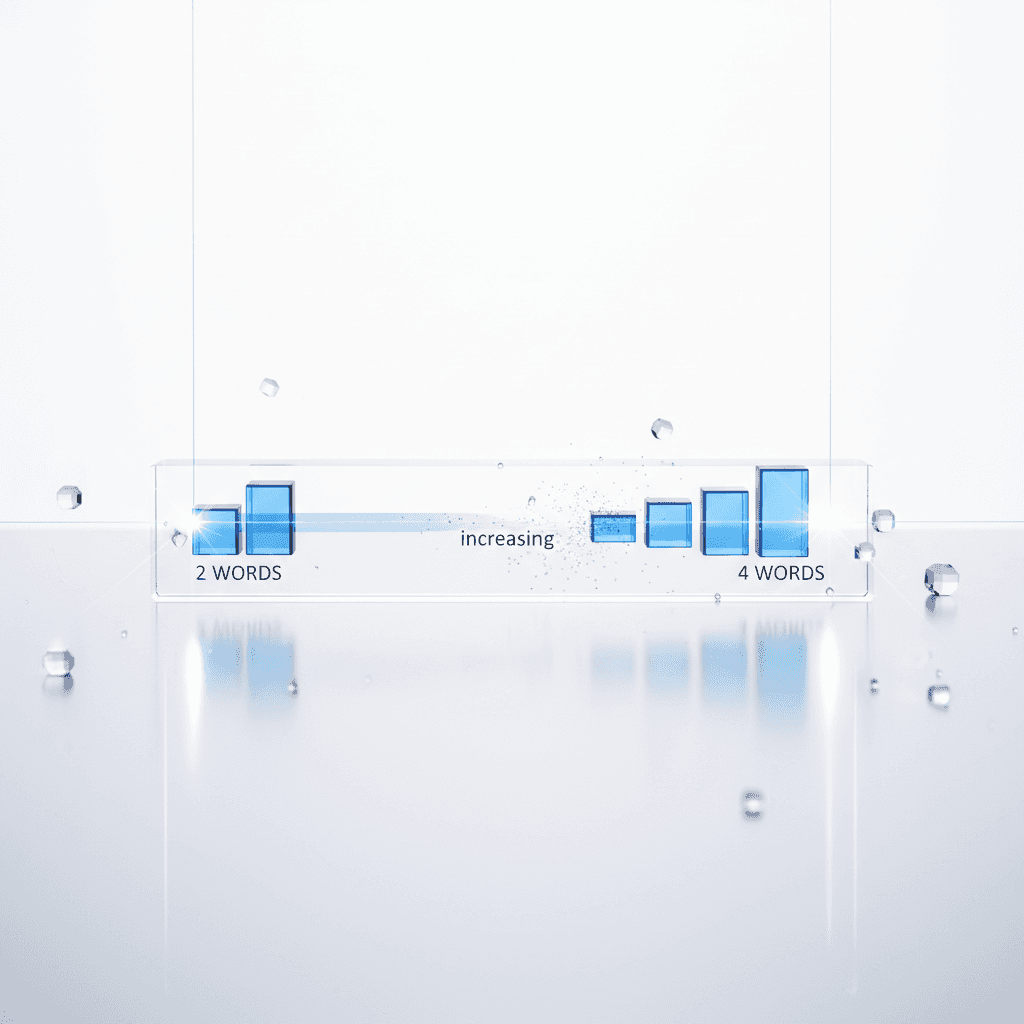
Start with LumaRead's 2-Word Phrases
Set LumaRead to 2-word phrase mode at 350 WPM—a comfortable starting pace. Focus on absorbing each 2-word chunk as a single unit rather than two separate words. Notice how phrases like 'the book,' 'he said,' 'was running' feel more natural to process together. Practice at this level for 3-5 sessions until it feels completely effortless. Your goal is automatic recognition without conscious processing of individual words.
Progress to 3-4 Word Chunks
Once 2-word chunks feel natural, increase to 3-word phrases at the same speed, then gradually increase speed. When 3-word chunks at 350 WPM feel comfortable, progress to 400 WPM, then 450 WPM. Once you're comfortable with 3-word chunks at 500 WPM, try 4-word phrases at 450 WPM. This graduated progression prevents frustration while building genuine skill. Expect this phase to take 1-2 weeks.
Practice Chunk Identification in Traditional Reading
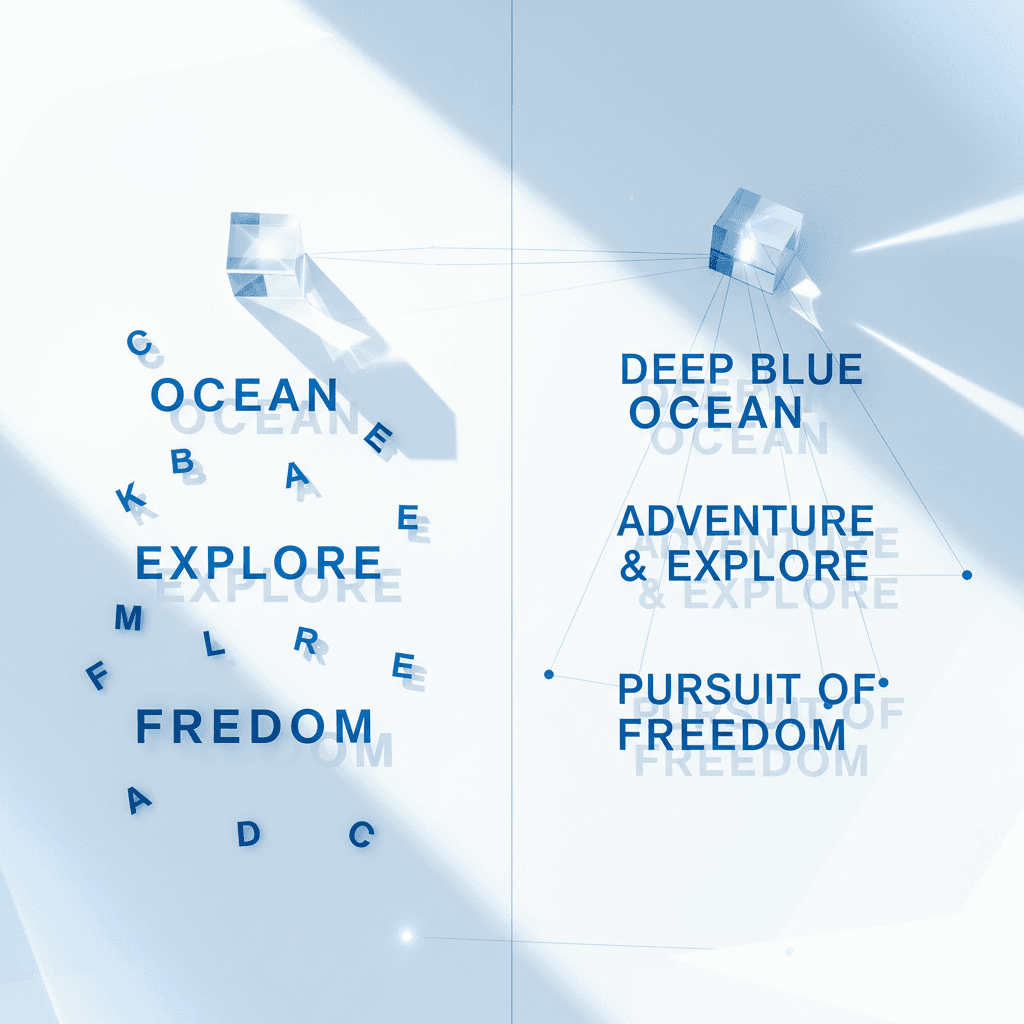
Apply your chunking skills to traditional reading (physical books, web pages, documents). As you read, consciously group words into chunks of 2-4 words. Use your finger or a pointer to guide your eyes, stopping briefly on each chunk rather than each word. This is harder than using LumaRead because you must identify and pace the chunks yourself, but it's essential for transferring your skills to all reading contexts. Aim for 15 minutes of practice daily.

Integrate Chunking with Speed
The final stage is making chunking automatic while reading at speed. In LumaRead, increase to 5-word phrases at 600-700 WPM. At this level, you're processing entire clauses as single units—'the brave knight drew his sword' becomes one thought, not six words. Continue pushing your limits while maintaining comprehension above 80%. Most readers plateau at 3-4 word chunks and 600-700 WPM, which represents a 2-3x improvement over baseline—a massive achievement.
💡 Pro Tips
- •Look at the center of word groups, not individual words—your peripheral vision will capture the whole chunk
- •Don't force it—chunking develops naturally with practice; fighting for bigger chunks usually backfires
- •Read content slightly below your comprehension level when practicing—focus on the technique rather than wrestling with content
- •Combine chunking with reduced subvocalization for maximum speed—saying chunks mentally is still faster than word-by-word
- •Use LumaRead's phrase size settings to train your chunking ability—the app does the hard work of grouping words intelligently
- •Prepositions often signal chunk boundaries—'in,' 'on,' 'at,' 'to,' and 'from' typically start new chunks
- •Articles (a, an, the) belong with their nouns—'the dog,' not 'the | dog'
- •Practice with fiction first, as narrative text chunks more naturally than technical writing
- •Track your progress—go from 2-word chunks to 3-word, then 4-word over 3-4 weeks for sustainable improvement
- •If comprehension drops below 70%, reduce chunk size or speed—building on shaky foundations leads to frustration
Visual Guide


Frequently Asked Questions
Chunking is the technique of reading multiple words simultaneously by grouping them into meaningful semantic units, rather than processing each word individually. For example, instead of reading 'the | cat | sat | on | the | mat' as six separate words with six eye fixations, you read 'the cat | sat on | the mat' as three chunks with three fixations. This reduces reading time by 50-75% while often improving comprehension because you're processing meaning rather than isolated words. LumaRead's phrase mode is specifically designed for chunking practice, presenting pre-grouped words to train your brain.
The typical progression is: Beginners start with 2-word chunks (immediately achievable); intermediate readers manage 3-4 word chunks after 2-3 weeks of practice; advanced readers can process 5-6 words per fixation. Research suggests the practical upper limit for most people is about 4-5 words, though this varies based on word length and familiarity. LumaRead lets you adjust phrase size from 1-6 words, so you can train at exactly your level and progress gradually. Remember that consistent 3-4 word chunking already represents a 2-3x speed improvement—you don't need to reach 6 words to see dramatic benefits.
Chunking is moderately challenging—harder than RSVP (which just requires adjusting to a new format) but easier than eliminating subvocalization (which requires breaking a lifelong habit). Most people see measurable results within 2-3 weeks of daily practice (15-20 minutes). The initial learning curve involves expanding peripheral vision awareness and learning to recognize natural phrase boundaries. LumaRead significantly accelerates learning by presenting pre-chunked text, removing the cognitive load of identifying chunk boundaries while you're building the core skill. Once chunking becomes automatic, it transfers to all reading, including physical books.
Yes! Chunking is actually a traditional speed reading technique that predates RSVP by decades. You can chunk while reading physical books, web pages, or any static text. The technique involves: (1) using your finger or a pointer to guide your eyes in jumps rather than continuous movement, (2) consciously grouping words into meaningful phrases as you read, and (3) practicing until this grouping becomes automatic. However, many people find it easier to learn chunking with LumaRead's phrase mode first, then transfer the skill to traditional reading, because the app handles the difficult chunk-identification step while you build the core processing skill.
Chunking works for all types of text, but the optimal chunk size varies by content complexity. For novels and general non-fiction, 3-4 word chunks work well. For technical material with specialized vocabulary, 2-3 word chunks may be more appropriate. For highly dense academic writing, you might chunk familiar phrases at 3-4 words while slowing to smaller chunks for novel concepts. The key is flexibility—LumaRead's adjustable phrase size lets you match your approach to your content. Many academics use chunking to skim literature reviews quickly, then slow down for detailed analysis of key papers.
Chunking and RSVP are complementary techniques that can be combined for maximum speed. RSVP eliminates eye movement overhead by presenting text at a fixed point; chunking reduces the number of presentations needed by grouping words. Standard RSVP shows one word at a time—combining it with chunking (phrase-mode RSVP) shows 2-5 words at a time, achieving even higher speeds. LumaRead supports both single-word RSVP (for learning the basics) and phrase-mode RSVP (for chunking practice). Many users start with single-word RSVP, then transition to phrase mode once comfortable with the format.