
Break the 300 WPM Barrier
Reduce inner speech to unlock faster reading with LumaRead

Subvocalization is the single biggest obstacle standing between most readers and their speed reading potential. It's the habit of silently "speaking" words in your head while reading—that inner voice that pronounces every word as your eyes move across the page. You might not even realize you're doing it (most people don't), but this invisible habit creates a hard ceiling on your reading speed: you can only read as fast as you can speak, which tops out around 150-250 words per minute. Breaking through this barrier is what separates casual readers from elite speed readers.
The neuroscience of subvocalization reveals why it's so hard to overcome. When you learned to read as a child, you learned by sounding out words—connecting written symbols to spoken sounds. This created a deeply-wired connection between your visual system (reading) and your auditory system (speaking/hearing). Research using electromyography (EMG) shows that even silent reading activates the muscles in your throat, tongue, and lips—you're literally "speaking" every word you read, just too quietly to hear (Hardyck & Petrinovich, 1970). This neural pathway served you well when you were five years old learning to decode written language, but it's now the anchor holding back your reading speed as an adult.
Here's the good news: your brain is capable of much faster reading. Visual processing speed far exceeds speech speed—you can recognize and understand written words in as little as 50 milliseconds, which would theoretically support reading speeds of 1000+ WPM if the eye movement and subvocalization bottlenecks were removed. Studies of deaf individuals who never learned to associate reading with speech show they can read at speeds that hearing readers rarely achieve, supporting the theory that subvocalization is a learned limitation rather than a fundamental constraint (Hanson & Fowler, 1987). The goal isn't to read faster than your brain can process—it's to remove the artificial bottleneck that keeps you reading at speech speed.
LumaRead's RSVP technology is particularly effective for reducing subvocalization because it forces you to read faster than you can speak. When words appear at 400, 500, or 600 WPM, your inner voice simply can't keep up—there isn't time to mentally pronounce each word. Your brain is forced to switch from auditory processing to pure visual processing, bypassing the speech pathway entirely. Many users report that after a few weeks of high-speed RSVP practice, they notice reduced subvocalization even when reading traditionally. The neural pathway for visual-only reading strengthens while the subvocalization pathway weakens from disuse.
It's important to understand that the goal isn't total elimination of subvocalization—that's neither achievable nor desirable for most readers. Some subvocalization actually aids comprehension, especially for complex or unfamiliar material. Poetry, dialogue, and rhythmic prose benefit from that inner voice. The goal is to reduce unnecessary subvocalization for most content, allowing you to choose when to engage it rather than being enslaved to it. Think of it like shifting gears in a car: sometimes you want the power of subvocalization for difficult terrain, but for highway cruising through familiar content, you want the efficiency of visual reading.
How Reducing Subvocalization Works
Benefits
- ✓Break through the 300 WPM ceiling that limits most readers for their entire lives
- ✓Access visual processing speeds of 500-800+ WPM once the subvocalization bottleneck is removed
- ✓Reduce mental fatigue—subvocalization requires constant mental 'effort' to pronounce words
- ✓Process information more efficiently by reading ideas rather than sounding out words
- ✓Achieve 500-700+ WPM reading speeds that previously seemed impossible
- ✓Gain control over your reading—choose when to engage inner speech rather than being stuck with it
- ✓Skills transfer to all reading contexts, not just digital reading with LumaRead
- ✓Better focus—without the distraction of internal narration, you can concentrate on meaning
Step-by-Step Guide

Develop Awareness of Your Inner Voice
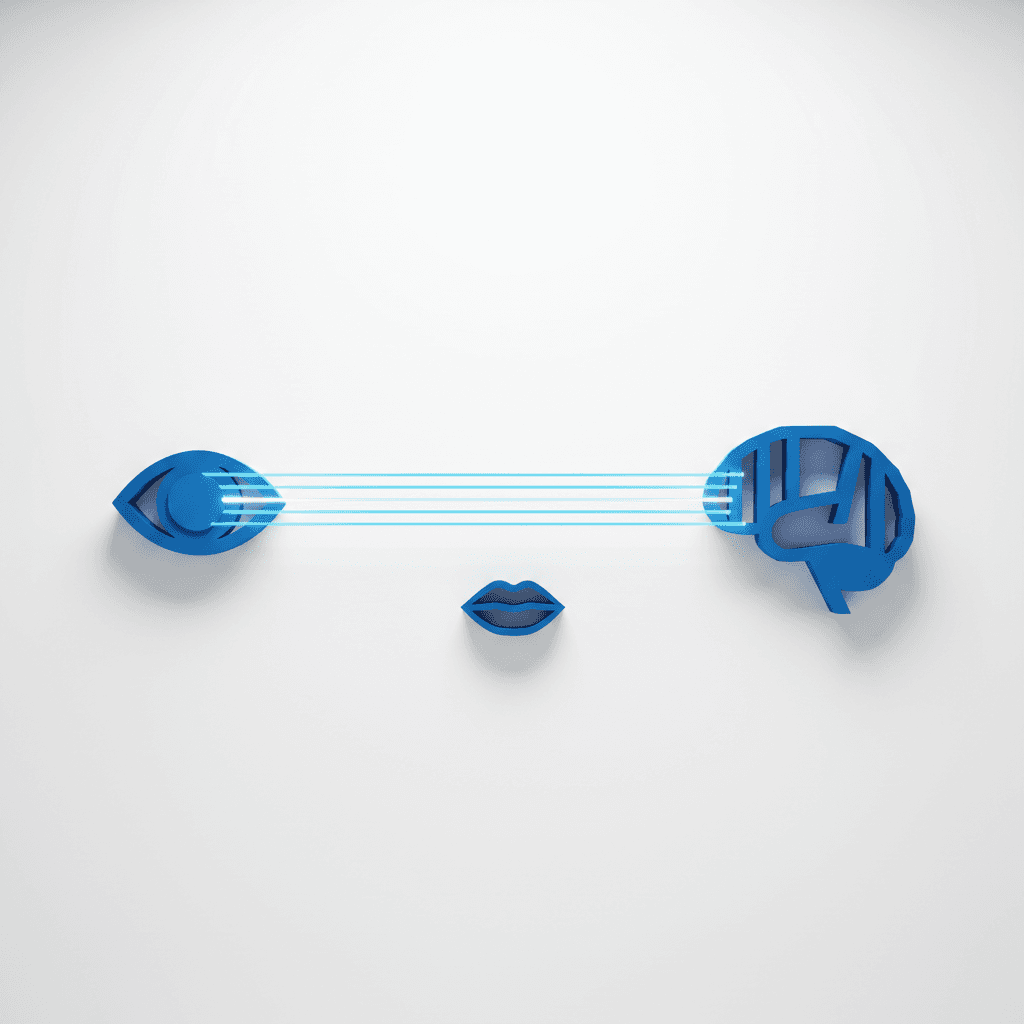
Most people subvocalize without realizing it. Spend a few reading sessions simply noticing: Can you 'hear' the words in your head? Do you feel micro-movements in your tongue or throat? Try placing your fingers lightly on your throat while reading—you may detect tiny muscle movements. This awareness is crucial because you can't change what you don't notice. Keep a journal of when subvocalization feels strongest (complex content, unfamiliar words) vs. weakest (familiar phrases, easy reading).
Practice Distraction Techniques
Occupy your speech mechanism to prevent subvocalization. Try: humming a steady tone while reading; counting '1-2-3-4' repeatedly; chewing gum vigorously; pressing your tongue firmly to the roof of your mouth. These techniques work because your brain can't pronounce text internally while your speech mechanism is engaged with something else. Practice 10-15 minutes daily with easy content. This feels awkward at first but proves that comprehension is possible without inner speech.
Force Speed with LumaRead RSVP
Set LumaRead to 400-450 WPM—faster than you can comfortably subvocalize but not so fast you lose comprehension entirely. At this speed, you'll notice your inner voice starting to drop words, then phrases, then entire sentences. That's the goal. Your brain is switching to visual processing because it has no other choice. Start with 10-minute sessions; if comprehension drops below 60%, reduce speed slightly. Gradually increase to 500+ WPM over 2-3 weeks.
Shift Focus from Words to Meaning
Instead of 'hearing' words, try to 'see' concepts. When you read 'the sunset painted the sky orange,' don't pronounce these words—visualize the image. For abstract concepts like 'democracy promotes freedom,' think about the relationship between ideas rather than the sounds of words. This meaning-focused approach engages your visual-conceptual system rather than your verbal-auditory system. Practice with content that's easy to visualize (fiction, narrative non-fiction) before tackling abstract material.

Build the Habit Through Consistent Practice
Reducing subvocalization requires rewiring neural pathways that have been reinforced for decades. This takes consistent practice over 4-6 weeks, not occasional effort. Schedule 15-20 minutes of daily practice at speeds above your subvocalization threshold (usually 400+ WPM). Track your progress—you should notice comprehension improving at higher speeds as your visual reading pathway strengthens. Many users report a 'breakthrough moment' around week 3-4 where high-speed reading suddenly 'clicks.'

Develop Strategic Flexibility
The final stage is learning when to use subvocalization and when to bypass it. Complex technical content, poetry, and unfamiliar material may benefit from slower, vocalized reading. Familiar content, reviews, and fast scanning work better without subvocalization. Develop the ability to 'shift gears'—engage your inner voice for challenging passages, then release it for easier sections. LumaRead's adjustable speed makes this easy: slow down for complexity, speed up for familiarity. This flexibility is the true mark of a skilled reader.
💡 Pro Tips
- •Don't try to eliminate subvocalization completely—some inner speech aids comprehension for complex material
- •Some subvocalization is natural for dialogue, poetry, and rhythmic prose—don't fight it for these
- •Use LumaRead's RSVP at speeds above 400 WPM to force your brain past the subvocalization barrier
- •Be patient—you're rewiring neural pathways built over decades; this habit takes 4-6 weeks to change significantly
- •Start with easier content when practicing—struggling with material and technique simultaneously is overwhelming
- •If you find yourself regressing to subvocalization, briefly increase speed to 'reset' your brain
- •Practice in a quiet environment—external sounds can trigger internal verbalization
- •Avoid mouthing words or moving your lips—this is 'vocalization' and must be eliminated before tackling subvocalization
- •Reading fiction can help because engaging narratives naturally pull you forward faster than subvocalization allows
- •Celebrate small wins—even reducing subvocalization by 30% can boost reading speed by 50%
Visual Guide


Frequently Asked Questions
Subvocalization is the internal speech that occurs when reading—the silent 'voice' in your head that pronounces words as you read them. It's a natural habit formed when you learned to read by sounding out words, but it limits reading speed to speech speed (150-250 WPM). EMG studies show that subvocalization actually involves micro-movements of your speech muscles—you're literally speaking every word you read, just too quietly to hear. Reducing this habit is key to reading at speeds above 300 WPM.
No, and you probably can't. Complete elimination isn't necessary, achievable, or even desirable for most readers. Research suggests some subvocalization aids comprehension, especially for complex material, dialogue, and poetry. The goal is to reduce unnecessary subvocalization and gain control—being able to read visually when speed matters and vocally when comprehension requires it. Think of subvocalization as a tool: sometimes useful, sometimes limiting. Mastery means choosing when to use it rather than being stuck with it always on.
Subvocalization caps your reading speed at speech speed because you can only 'pronounce' about 150-250 words per minute internally. Even if your eyes could move faster and your brain could process faster, your reading is bottlenecked by your speech system. Your visual system can actually process words in 50-150 milliseconds (theoretically supporting 1000+ WPM), but subvocalization forces everything through the much slower speech pathway. Reducing subvocalization removes this artificial bottleneck, allowing access to your true visual processing speed.
Most people subvocalize without realizing it. Here are ways to check: (1) Place your fingers lightly on your throat while reading—feel for tiny muscle movements. (2) Notice if you can 'hear' words in your head as you read. (3) Try to read while humming—if it feels impossible or comprehension drops dramatically, you're heavily reliant on subvocalization. (4) Check if your reading speed is stuck around 200-300 WPM regardless of how 'fast' you try to read—this ceiling often indicates subvocalization.
Yes, significantly. The typical progression is: heavy subvocalizers read at 150-250 WPM (speech speed); moderate subvocalizers reach 300-400 WPM; light subvocalizers achieve 500-600 WPM; minimal subvocalizers can reach 700-1000+ WPM. Research with deaf readers (who never learned to associate text with speech) shows they often read at 400-600 WPM naturally—supporting the theory that subvocalization is a learned limitation. LumaRead users who successfully reduce subvocalization typically see 50-100% speed improvements.
Significant reduction typically takes 4-6 weeks of consistent daily practice (15-20 minutes). The timeline usually follows this pattern: Weeks 1-2: Developing awareness, practicing distraction techniques, getting comfortable with high-speed RSVP. Weeks 3-4: Noticing breakthrough moments where high-speed reading 'clicks.' Weeks 5-6: Consolidating gains, developing flexibility to shift between visual and vocal reading. Some people see faster results; others take longer. The key is consistent practice—occasional effort won't rewire decades-old neural pathways.
LumaRead's RSVP technology forces your brain past the subvocalization barrier by presenting words faster than you can mentally pronounce them. When words appear at 450, 500, or 600 WPM, there's literally not enough time to engage your speech system—your brain must switch to visual processing. This is more effective than traditional speed reading methods that rely on willpower because RSVP removes the choice. With consistent practice at high speeds, your visual reading pathway strengthens while your subvocalization pathway weakens, creating lasting change.